
Prenatal Nutrient Doses: How Much You Need in Pregnancy
One reference table to check any prenatal vitamin against, with the sources behind every number.
 By
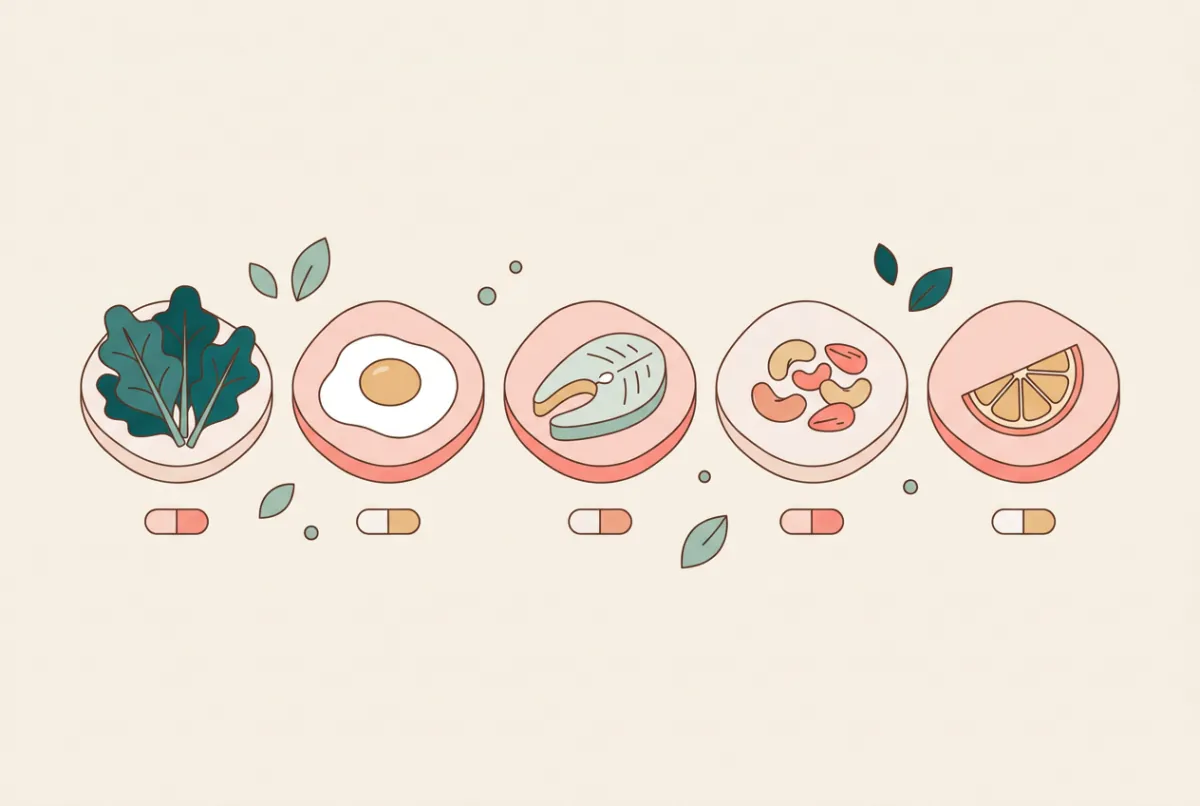
Prenatal labels list dozens of nutrients in different units, and it is hard to know which numbers matter. This page puts the official pregnancy targets for the eight nutrients that matter most in one place, so you can check any prenatal vitamin against them. All targets are from the NIH Office of Dietary Supplements (ODS) and ACOG, for ages 19 to 50 unless noted.
Pregnancy nutrient doses at a glance
| Nutrient | Daily target in pregnancy | Upper limit (UL) | What experts advise on supplements |
|---|---|---|---|
| Folate | 600 mcg DFE (RDA) | 1,000 mcg from supplements and fortified food | ACOG: prenatal with at least 400 mcg folic acid from 1 month before pregnancy through week 12 |
| Iron | 27 mg (RDA) | 45 mg | ACOG: low-dose iron from the first trimester; screen for anemia |
| Iodine | 220 mcg (RDA) | 1,100 mcg | American Thyroid Association: 150 mcg a day as potassium iodide |
| Choline | 450 mg (AI) | 3,500 mg | No formal supplement advice; most pregnant people fall short |
| Vitamin D | 15 mcg, 600 IU (RDA) | 100 mcg, 4,000 IU | ACOG: no routine extra beyond the prenatal; 1,000 to 2,000 IU is considered safe if deficient |
| DHA | No US RDA | None set | EFSA: extra 100 to 200 mg DHA; FAO: 300 mg DHA plus EPA including 200 mg DHA |
| Calcium | 1,000 mg (RDA); 1,300 mg ages 14 to 18 | 2,500 mg | ACOG: 1,500 to 2,000 mg if your intake is under 600 mg a day |
| Vitamin B12 | 2.6 mcg (RDA) | Not determined | Supplement or fortified foods if vegetarian or vegan |
Sources: NIH ODS pregnancy fact sheet tables and recommendation summaries,1 and ACOG.2 RDA is the Recommended Dietary Allowance; AI is the Adequate Intake, used when there is not enough evidence for an RDA.
Folate and folic acid
The pregnancy RDA for folate is 600 mcg dietary folate equivalents (DFE), up from 400 mcg DFE. One mcg DFE equals 1 mcg of food folate, 0.6 mcg of folic acid taken with food, or 0.5 mcg of folic acid on an empty stomach, so 400 mcg of folic acid in a supplement provides about 667 mcg DFE.1
ACOG recommends a daily prenatal with at least 400 mcg of folic acid starting at least 1 month before pregnancy and through the first 12 weeks, and 4 mg for those who have had a pregnancy affected by a neural tube defect, starting 3 months before pregnancy, under a clinician's care.2 The US Preventive Services Task Force recommends 400 to 800 mcg a day for anyone planning or capable of pregnancy.1 ACOG notes that folic acid is the only form of folate proven to help prevent neural tube defects.2
Iron
The RDA rises from 18 mg to 27 mg in pregnancy, to make the extra blood you and the baby need.2 ACOG recommends low-dose iron supplementation starting in the first trimester and screening for anemia in the first trimester and again at 24 to 28 weeks.1 A complete blood count at the first prenatal visit checks for anemia.4 ACOG notes gummy prenatals cannot hold the same amount of iron as tablets, so you may need a separate iron supplement if you take one.2 Iron is best absorbed with vitamin C foods such as oranges, strawberries, broccoli and peppers.2
Iodine
Iodine is needed for the baby's brain development. The RDA rises from 150 to 220 mcg in pregnancy.1 The American Thyroid Association recommends 150 mcg a day as potassium iodide for people who are pregnant or planning, ideally from 3 months before conception, and the American Academy of Pediatrics recommends 150 mcg plus iodized salt.1 Not all prenatals contain iodine, so check the label.1 Both low and high intakes have been linked to problems, so stay under the 1,100 mcg upper limit.1
Choline
Choline supports the development of the baby's brain and spinal cord. The AI is 450 mg a day in pregnancy.1 Most pregnant women do not meet it, and ACOG notes choline is not found in most prenatal vitamins.2 There are no formal supplement recommendations, but the Dietary Guidelines advise eating a variety of choline-containing foods.1 Eggs, milk, beef liver, chicken, soy and peanuts are good sources.2
Vitamin D
The RDA is 15 mcg (600 IU) a day, the same as outside pregnancy.1 ACOG finds insufficient evidence to screen everyone for vitamin D deficiency or to recommend routine supplements beyond what a prenatal provides, and notes most experts agree that 1,000 to 2,000 IU a day is safe for pregnant people who are deficient.1 The upper limit is 100 mcg (4,000 IU).1
DHA and omega-3s
No US intake recommendation exists for DHA or EPA. The only omega-3 with an official target is ALA, at 1.4 g a day in pregnancy.1 International recommendations summarized by NIH:1
- EFSA: an extra 100 to 200 mg DHA a day in pregnancy, on top of 250 mg DHA plus EPA.
- FAO: at least 300 mg DHA plus EPA a day, of which 200 mg is DHA.
- ACOG, FDA and the Dietary Guidelines: 8 to 12 ounces a week of low-mercury seafood.
Two to three 4-ounce servings a week from the FDA "Best Choices" list, such as salmon or sardines, is the food route.3 If you do not eat fish, ask your clinician about a DHA supplement.
Calcium
The RDA is 1,000 mg (1,300 mg for ages 14 to 18), the same as outside pregnancy.1 ACOG recommends 1,500 to 2,000 mg a day of supplemental calcium for pregnant people whose intake is under 600 mg, to reduce the risk of preeclampsia.1 Dairy, sardines with bones, fortified foods and leafy greens are good sources.2
Vitamin B12
The RDA rises slightly to 2.6 mcg.1 Meat, fish, poultry and milk supply it. The Academy of Nutrition and Dietetics recommends B12 supplements or fortified foods for people following vegetarian or vegan diets, especially vegans.1
How to check your prenatal label
- Folic acid: at least 400 mcg (or about 667 mcg DFE).
- Iodine: about 150 mcg.
- Iron: about 27 mg, unless your clinician advises otherwise.
- Vitamin D: at least 15 mcg (600 IU).
- Choline and DHA: a bonus if present; plan food sources either way.
- Vitamin A: if it lists preformed vitamin A (retinol), stay well under 3,000 mcg a day.1
- Third-party testing: NIH notes a 2023 government review found 11 of 12 prenatal products had at least one nutrient outside acceptable limits from the label; USP, NSF and ConsumerLab test supplements independently.1
Dietary supplements are not FDA-approved and are not reviewed by the FDA before they are sold. Take one daily serving only.2
Use these doses as a checklist when you read a prenatal label. For the food side, read pregnancy nutrition; for personal advice, a registered dietitian can help, and some services, such as Fay, connect you with dietitians who take insurance. More first-trimester guides are on the Pregnant hub, and the due date calculator tells you how far along you are.
Frequently asked questions
This page is educational and is not medical advice. Talk to a clinician about your own situation, and seek urgent care for heavy bleeding, severe pain or fainting.
Keep reading

Pregnancy Nutrition: What to Eat, What to Avoid and Why
What to eat in pregnancy and what to avoid, from ACOG, FDA and CDC: key nutrients, the fish and mercury chart, listeria foods, the 200 mg caffeine limit and alcohol.

First Trimester Checklist: 12 Things to Do After a Positive Test
A first trimester checklist built on ACOG, CDC and FDA guidance: folic acid, first appointment, food safety, caffeine, alcohol, medications and support.
Step 6: Pregnant
What to do after a positive pregnancy test: due date, first prenatal appointment, nutrition, prenatal vitamins and the doses that matter, and support for your mind.
Sources
- 1Dietary Supplements and Life Stages: Pregnancy (Health Professional Fact Sheet). NIH Office of Dietary Supplements. RDA, AI and UL tables and professional recommendations; updated April 3, 2025
- 2Healthy eating during pregnancy (FAQ). American College of Obstetricians and Gynecologists
- 3Advice about eating fish. U.S. Food and Drug Administration and U.S. Environmental Protection Agency
- 4Routine tests during pregnancy (FAQ). American College of Obstetricians and Gynecologists